
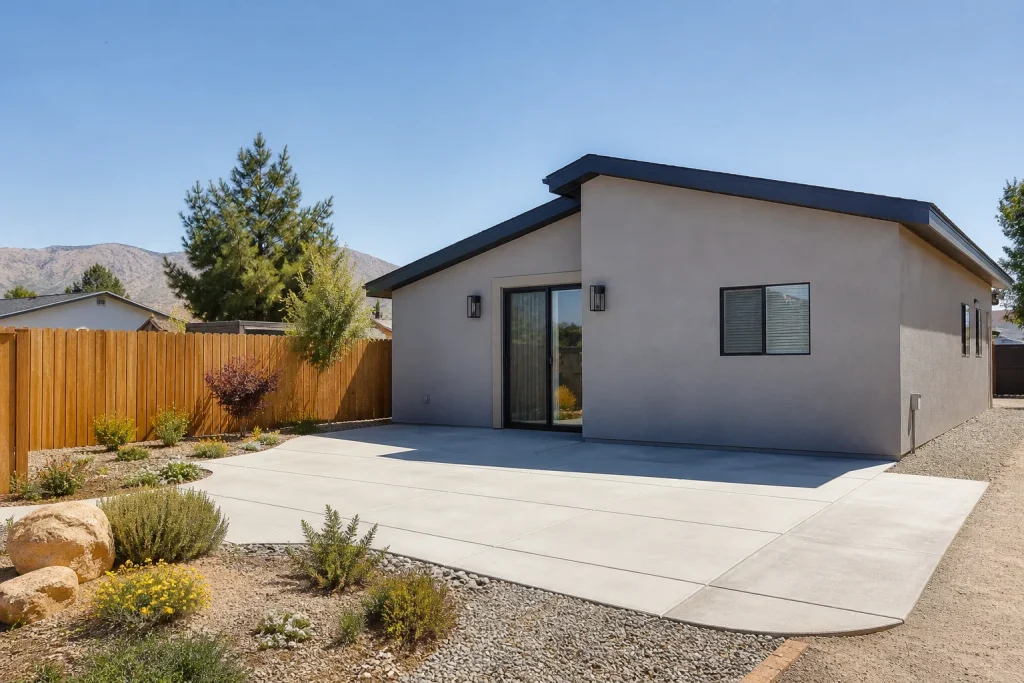
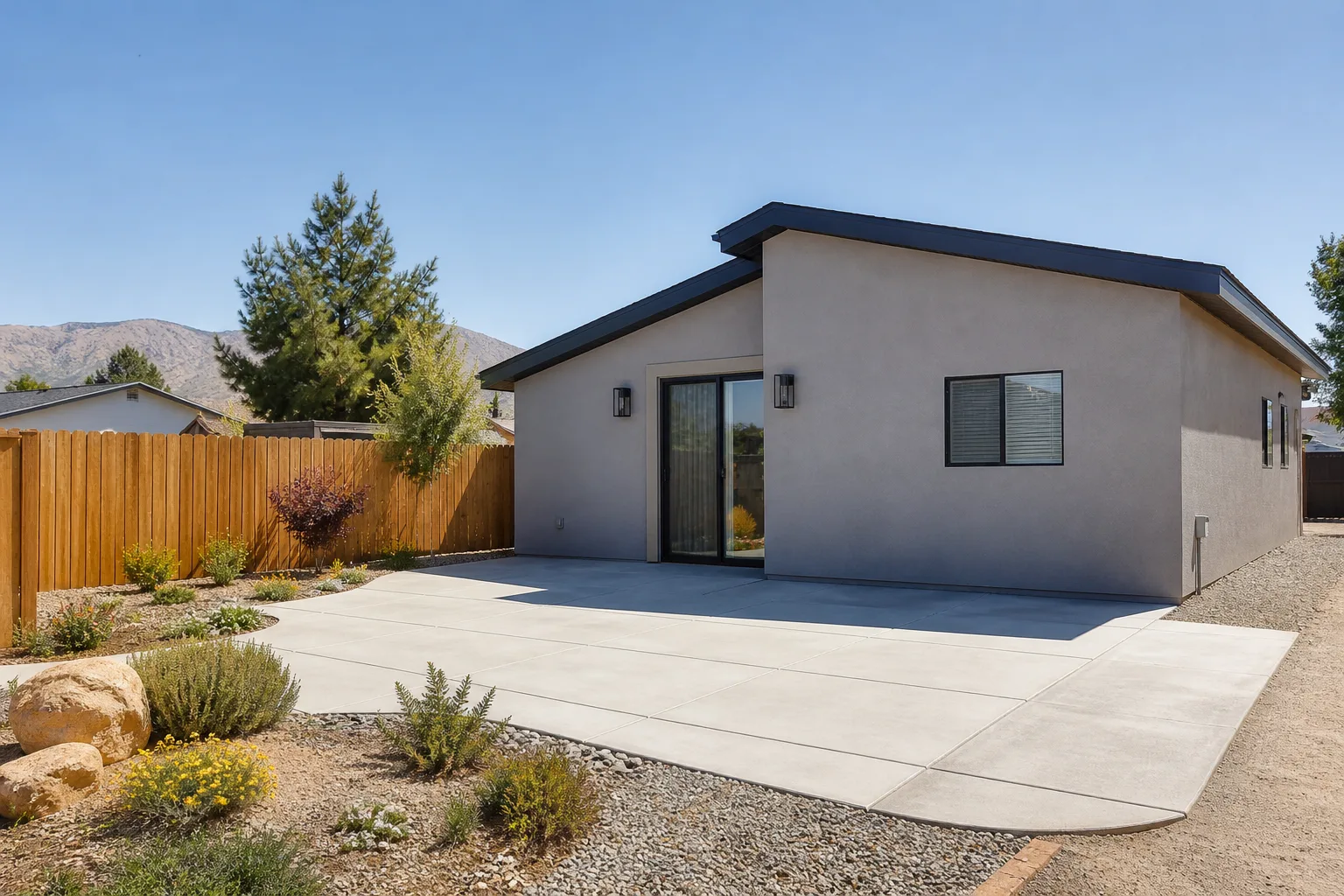
ADU Builders What It Really Costs: What Apple Valley Homeowners Pay in 2026
The $150,000 ADU advertised by three different prefab companies probably costs $210,000 to $240,000 by the time it’s permitted, connected to utilities, and finished on a typical Apple Valley lot. That gap isn’t fraud. It’s what happens when marketing uses coastal California soil assumptions in a high-desert market where grading, utility runs, and climate-specific mechanicals carry real costs. If you’d rather skip the research and get a line-item quote for your specific lot, call (877) 265-9846.
We’ve priced and built ADUs across the Victor Valley, and the single biggest mistake we see is homeowners budgeting off a manufacturer’s “starting at” number. Those numbers assume a flat lot, utilities stubbed at the build site, and mild climate conditions. Apple Valley delivers none of those assumptions on most parcels. Here’s the honest breakdown.
What an ADU Actually Costs in Apple Valley in 2026
Across every format we work with, a completed one-bedroom ADU in Apple Valley lands between $190,000 and $280,000 in 2026. A two-bedroom runs $240,000 to $340,000. The range is wide because site conditions, not the box itself, drive the variance.
Here’s the itemized picture we give homeowners before they sign anything:
- Base structure (prefab or site-built shell): $90,000 to $160,000 depending on format and manufacturer. A Tuff Shed-based conversion sits at the lower end. A Dvele or Plant Prefab panelized unit with higher-end envelope specs lands higher.
- Site prep and grading: $12,000 to $28,000 in Apple Valley. This includes clearing, compaction, and in many cases removing expansive soils or adding engineered fill. Desert lots with clay-heavy soil need more prep than a coastal slab pour.
- Foundation: $15,000 to $35,000. Apple Valley’s soil conditions often require deeper footings or post-tension slabs. Frost depth isn’t the issue here. Expansive soil and drainage are.
- Utility connections and trenching: $10,000 to $40,000. This is where Apple Valley’s larger parcels punish you. Running a sewer line 150 feet across a half-acre lot isn’t a line item on most prefab quotes. It should be.
- Permits and San Bernardino County fees: $8,000 to $18,000. More on impact fees below.
- Interior finish (kitchen, bath, flooring, fixtures): $35,000 to $70,000. Many prefab quotes stop at the shell. A livable ADU needs a kitchen and bathroom someone can actually use.
- Climate-appropriate HVAC and mechanicals: $12,000 to $22,000. Apple Valley summers routinely hit 100 degrees. A budget mini-split that works in San Diego won’t hold up the same way here without proper sizing and insulation upgrades.
Those numbers come from actual bids we’ve reviewed and builds we’ve completed in Apple Valley neighborhoods like Desert Knolls, Sycamore Rocks, and the older parcels around Kiowa Road. The pattern is consistent: anyone quoting under $180,000 for a completed one-bedroom is excluding at least two major cost categories.
Why Apple Valley Lots Change the Math on Site Prep
Most prefab marketing assumes a suburban infill lot: 5,000 square feet, flat, utilities within 20 feet of the build site. Apple Valley’s average lot is triple that size, and many parcels are sloped, rocky, or sit on soils that expand and contract with moisture. That changes the foundation conversation entirely.
On a standard coastal lot, a slab-on-grade foundation with shallow footings is often sufficient. In Apple Valley, we regularly see projects where the geotechnical report recommends removing 18 to 24 inches of expansive soil and replacing it with engineered fill before a slab goes down. That’s $8,000 to $15,000 of work that no prefab “starting at” price ever includes.
Drainage matters too. Flash flooding in the high desert is real, and San Bernardino County requires drainage plans that account for sheet flow across your property. If your ADU site sits in a natural drainage path, you’ll need swales or a retaining wall. That’s another $4,000 to $12,000.
The practical takeaway: when you’re comparing quotes in Apple Valley, ask specifically whether the number includes the geotechnical report, soil remediation, and drainage engineering. If the builder waves off those questions, the quote isn’t complete.
Prefab vs. Site-Built: The True Cost Comparison for 2026
Prefab ADUs get marketed as cheaper and faster. The truth is more nuanced. The structure itself is often less expensive. Everything around the structure costs the same or more.
Here’s how the numbers actually shake out in Apple Valley:
- Prefab delivery and crane costs: $4,000 to $12,000. Modular units from Abodu or Cover require a crane if your lot has limited street access or overhead clearance. Some Apple Valley streets with mature trees or overhead power lines add complexity. That cost is never in the manufacturer’s brochure price.
- Foundation compatibility: Prefab units need level, precise foundations. If your site prep has any variation beyond a quarter inch, you’ll pay for corrective work before the unit can be set. Site-built framing absorbs minor variations more easily.
- Utility connections cost the same either way: Whether the unit arrives on a truck or gets framed in place, your sewer, water, and electrical runs are identical. A 120-foot trench doesn’t care what construction method you chose.
- Interior finish: This is where prefab’s advantage shrinks. Some manufacturers include a finished interior. Several do not. If the unit arrives as a shell, you still need $35,000 to $70,000 of kitchen, bath, and flooring work. We handle that in-house, which is why our prefab quotes include finish costs that other builders leave for “owner responsibility.”
Site-built ADUs in Apple Valley typically run $10,000 to $25,000 more than a comparable prefab on the structure alone, but they offer total design flexibility. We recommend site-built when the homeowner wants a specific roofline to match their main house, or when the lot has access constraints that make crane placement difficult.
We’ve built both ways. The right answer depends on your lot, your timeline, and what you’re willing to trade. Our job is to give you the comparison in plain numbers, not to push you toward the inventory sitting in our yard. We match you to the right ADU product – not the one we happen to stock.
What San Bernardino County Fees Add to Your Total
ADU impact fees in Apple Valley are lower than they were five years ago, which is good news. But they’re not zero, and they’re not consistent across all situations.
For ADUs under 750 square feet, San Bernardino County waives most impact fees entirely. For units between 750 and 1,000 square feet, fees are prorated. Above 1,000 square feet, you’ll pay the full rate, which typically runs $6,000 to $14,000 depending on the specific fee schedule and whether schools or fire districts apply additional assessments.
School fees deserve their own callout. Some Apple Valley ADUs trigger school district impact fees that add $3,000 to $6,000 to the permit total. Whether you owe them depends on your unit’s size and the district’s current fee resolution. A thorough builder quote lists these as separate line items, not as a vague “permits and fees” catchall that comes in low and gets corrected later.
Other permit costs that get buried: plan check fees, building permit fees, electrical and plumbing permits, and in some cases a grading permit if your lot requires significant earth movement. The all-in permit package for a typical Apple Valley ADU is $8,000 to $18,000.
When you’re evaluating quotes, ask the builder to show you the actual San Bernardino County fee schedule line items. If they can’t, they’re guessing. Guessing on fees is how change orders happen.
How to Spot a Low-Ball ADU Quote in Apple Valley
We review competitor quotes for Apple Valley homeowners all the time. Low-ball bids follow a predictable pattern. They include a structure, a vague “site work” allowance, and a permit number that’s half the realistic amount. Everything else is cut or buried.
A complete ADU quote in Apple Valley should include these specific line items:
- Geotechnical soil report and analysis
- Grading, excavation, and soil remediation (if required)
- Foundation type and spec (slab, post-tension, or raised)
- Utility trenching distances for sewer, water, and electrical
- San Bernardino County permit fees, plan check, and impact fees listed separately
- School district fees where applicable
- Delivery and crane costs for prefab units
- HVAC system sized for Apple Valley’s summer and winter temperature swings
- Kitchen and bathroom finish specifications, not allowances
- Drainage plan and any required retaining walls or swales
If your quote doesn’t show eight of those ten items, someone is giving you the marketing number, not the build number.
One more thing we tell every Apple Valley homeowner: ask about the change-order policy. A fixed-price contract with a clear scope is the only way to protect yourself. We write fixed-price proposals with line-item detail, which means the number you sign is the number you pay. If a builder won’t commit to fixed pricing, walk.
Climate Considerations: Apple Valley Mechanicals Aren’t Optional
An ADU built in Apple Valley has to survive 105-degree summers and winter nights below freezing. That sounds obvious, but homeowners don’t always realize how much it affects the budget.
Here’s what climate-appropriate building means in practice:
- Insulation above code minimums: The high desert temperature swing is brutal on poorly insulated structures. We spec R-19 walls and R-38 ceiling insulation as standard on our ADUs, not the county minimum.
- HVAC sizing for extreme heat: A properly sized mini-split system for a one-bedroom ADU in Apple Valley runs $8,000 to $14,000 installed. Undersized units run constantly in July and fail early. We see this failure mode regularly in older Apple Valley garage conversions where a homeowner installed a budget unit and burned it out within three summers.
- Window glazing and orientation: South-facing and west-facing glass loads massive solar heat gain. Low-e glazing and window placement matter more here than they do in mild coastal zones.
- Exterior cladding durability: UV exposure at 3,000 feet of elevation degrades cheap siding quickly. We specify James Hardie fiber-cement cladding on most Apple Valley ADUs because it holds up to the sun and adds meaningful fire resistance, which matters in a market where wildfire awareness is part of living anywhere near the San Bernardino Mountains.
When a builder quotes you a structure that ignores these factors, the unit still gets built. You just pay for the corrections later, when the first heat wave exposes the problem.
When to Call a Pro
If you’re reading this and already have land survey results, a geotech report, and a clear picture of your utility stubs, you can probably get accurate quotes and make a decision without much outside help. Most homeowners aren’t at that stage. Most have a lot, a vague idea of budget, and three conflicting prefab brochures on the kitchen counter.
That’s where a consultation helps. We’ve walked Apple Valley parcels in every stage of development, from raw dirt in the northern stretches to infill lots near the airport and established neighborhoods off Bear Valley Road. The conversation usually takes an hour, and you leave with a realistic cost range for your specific lot, not a brochure number.
If you’re also thinking about updating the main house while the crew is on site, our kitchen remodeling in Loma Linda and bathroom remodeling in Loma Linda teams handle that work too. For homeowners closer to that side of the valley, you can also connect with our ADU builders in Loma Linda for the same consultation.
The Bottom Line
Apple Valley ADU costs in 2026 are not what the marketing numbers suggest, and that’s okay. Once you know what the real line items are, you can budget accurately and make a sound decision. A completed one-bedroom ADU runs $190,000 to $280,000. A two-bedroom runs $240,000 to $340,000. Site prep, utility runs, and climate-appropriate mechanicals account for most of the gap between brochure pricing and real-world costs.
The best way to understand your actual number is to get a line-item quote scoped to your specific parcel. At Colonial ADU Builders, we provide fixed-price proposals with every cost category broken out. No allowances, no buried fees, no surprises after the contract is signed. If you’re in Apple Valley and want a realistic price for your ADU, call (877) 265-9846 for a free estimate.
Frequently Asked Questions
A completed one-bedroom ADU in Apple Valley typically costs between $190,000 and $280,000. Two-bedroom units run $240,000 to $340,000. The range reflects differences in site prep, utility distances, foundation requirements, and interior finish level. Base structure pricing only tells a small part of the story. Call (877) 265-9846 for a line-item estimate on your specific lot.
Because some builders quote the structure and leave site work, utility connections, permits, and interior finish for later change orders. Others quote the complete project. When you compare bids, ask whether each quote includes grading, soil remediation, trenching, San Bernardino County permit fees, HVAC, and interior finish. A lower number with fewer line items usually means a higher final bill. Call (877) 265-9846 and we’ll walk through the comparison with you.
The structure itself is often cheaper. The total project usually isn’t, because delivery, crane fees, foundation precision requirements, and utility connections add costs that apply regardless of build method. Prefab makes sense when timeline matters or when the manufacturer’s standard design fits your needs. Site-built makes sense when you need design flexibility or your lot has access constraints. We build both ways and can give you the honest comparison.
For a realistic quote, yes. Apple Valley has areas with expansive soils that require remediation before a foundation goes in. Without a geotechnical report, any quote is an estimate at best. A thorough builder will include the soils report as part of the pre-construction scope. Call (877) 265-9846 and we’ll explain what your specific parcel needs.
Written by the team at Colonial ADU Builders, serving Apple Valley since 2011.
Need ADU Help?
Call Colonial ADU Builders — licensed & insured, here with fast after-hours help in Loma Linda.
(877) 265-9846